A vehicle with an expired inspection is not just a fine: it is a van stuck in the yard on the day you needed it. With five, ten or fifty vehicles, deadlines pile up, and a single month of distraction is enough to end up with a vehicle that is off the road.
This guide explains how often each type of vehicle needs its inspection in Italy (the revisione, similar to the UK MOT), what you risk if you miss it, and a simple method for keeping your whole fleet under control.
How often vehicles need an inspection
The rule is set by article 80 of the Italian Highway Code (Codice della strada) and depends on the type of vehicle.
| Vehicle type | First inspection | Then |
|---|---|---|
| Cars and goods vehicles up to 3.5 t | 4 years after registration | Every 2 years |
| Motorcycles and mopeds | 4 years after registration | Every 2 years |
| Goods vehicles over 3.5 t and heavy trailers | 1 year after registration | Every year |
| Buses, taxis, hire cars with driver, ambulances | 1 year after registration | Every year |
The deadline covers the whole month: a van registered in March 2022 must have its first inspection by the end of March 2026, and then every two years, again by the end of March.
What you risk with an expired inspection
Driving with an expired inspection carries a fine of 173 to 694 euros, which doubles for repeat offences. The bigger problem is operational: the vehicle is suspended from use until it passes the inspection. Driving it anyway brings fines of several thousand euros and an administrative seizure.
For a business that means missed deliveries, an idle driver and perhaps a hire vehicle booked in a hurry. That is why it pays to book the inspection at least a month ahead: at busy times test centres have waiting lists of several weeks.
The other deadlines of a company vehicle
The inspection is the best-known deadline, but not the only one. For each vehicle it is worth tracking:
- Motor liability insurance: after expiry, cover continues for 15 days; after that the vehicle cannot be driven.
- Vehicle tax (bollo): rules vary by region, and in many fleets each vehicle pays in a different month.
- Servicing: by mileage or time, according to the manufacturer's handbook or the lease contract.
- Tachograph: for vehicles fitted with one, the periodic check must be done at least every two years at an authorised workshop.
- Lease and rental contracts: end date, included mileage, return.
- Drivers' documents: licence renewal, CQC (driver qualification card) and tachograph card.
Multiplied by the number of vehicles, that makes dozens of dates a year, each with a different person in charge.
How to organise your fleet deadline tracker
Whether you use a spreadsheet or software, the method that works is always the same.
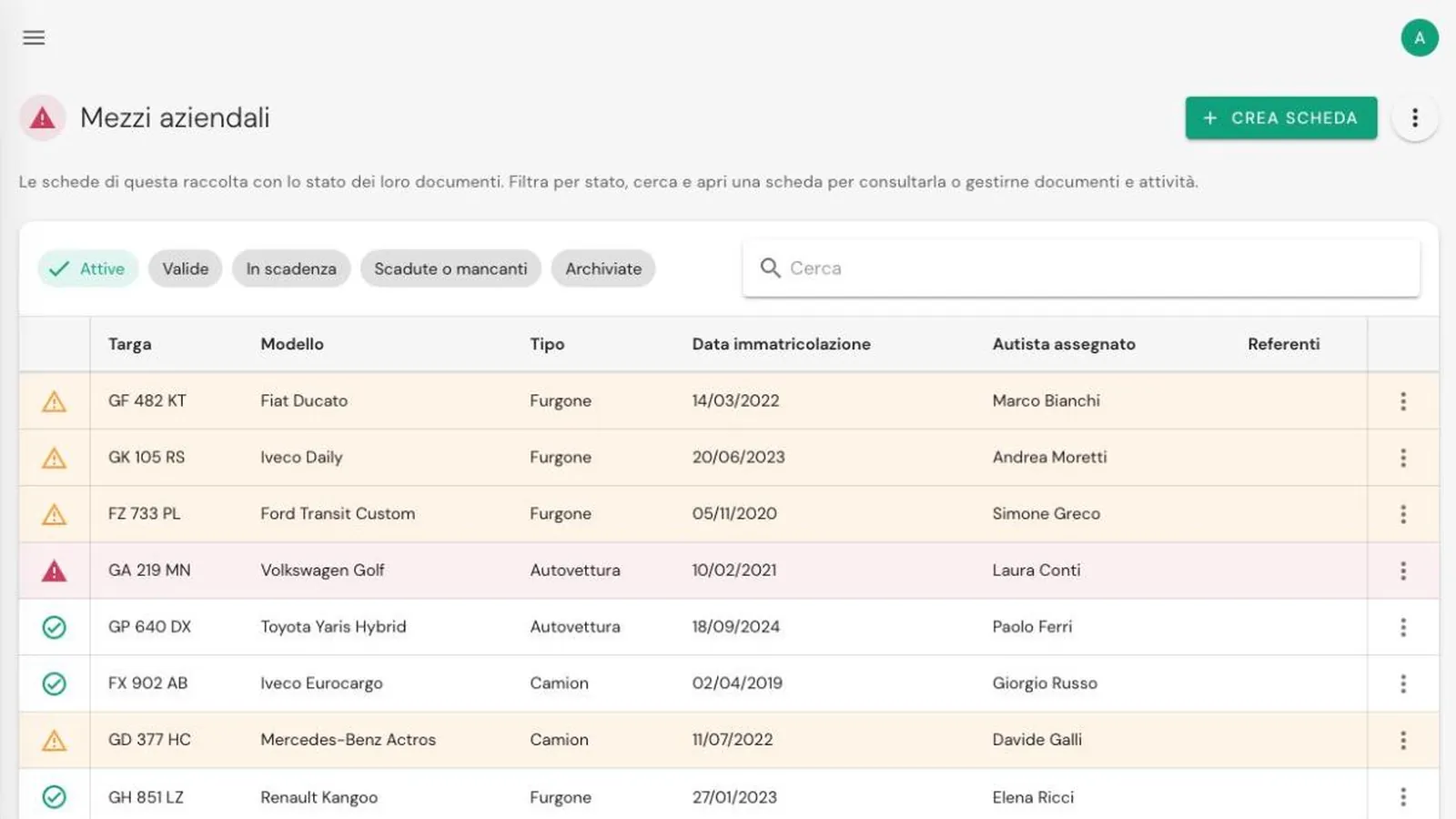
- One record per vehicle, with registration number, model, registration date and who uses it.
- All of the vehicle's deadlines in its record, not in separate files: inspection, insurance, tax, tachograph, servicing.
- A reminder that arrives early, not on the day: 30 days for the inspection, 15 for insurance.
- One person responsible for each deadline: whoever books the inspection must get the reminder, not just whoever built the file.
- Documents attached: registration document, insurance policy and the latest inspection certificate always at hand, even during a roadside check.
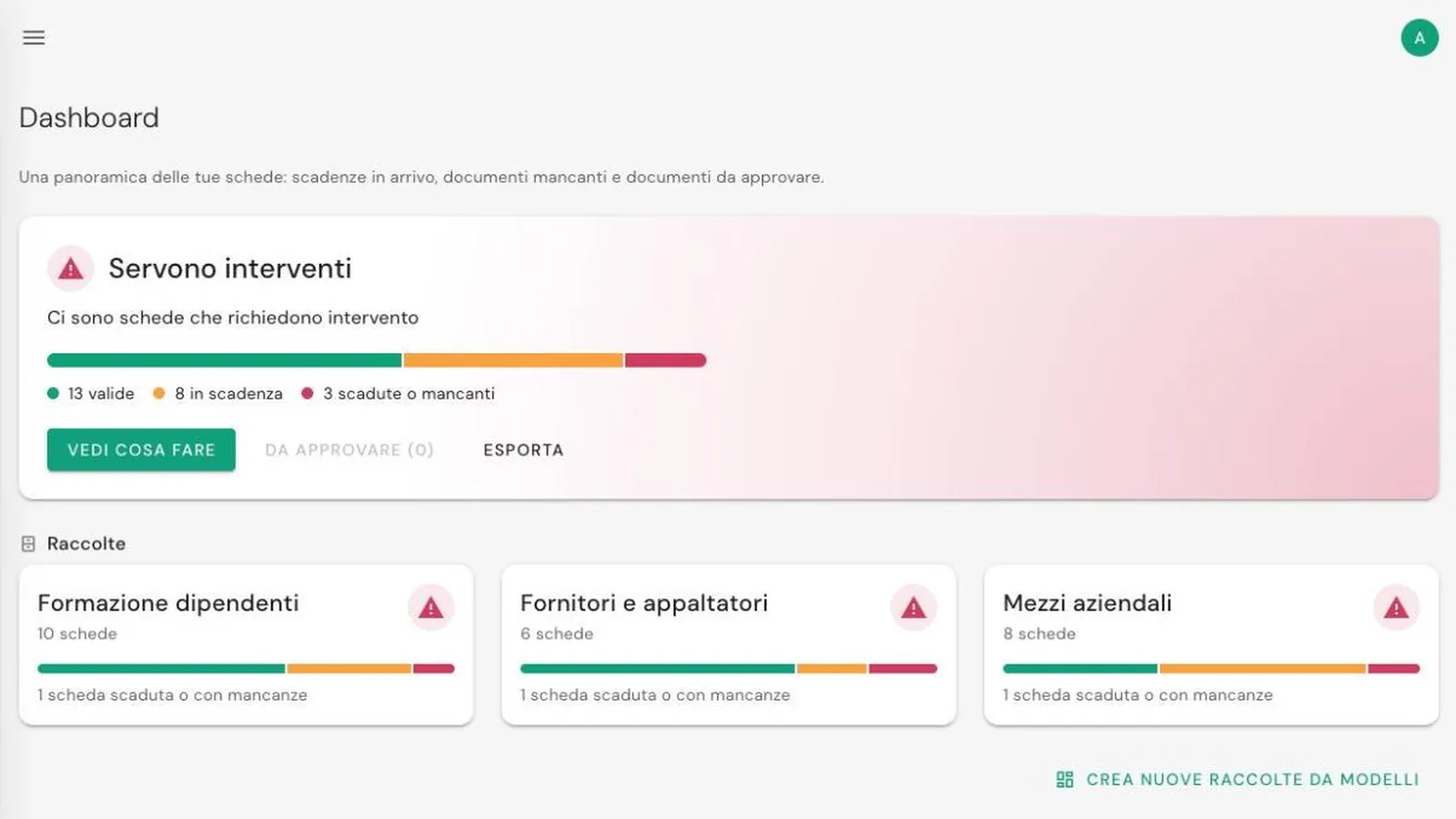
In JustFlag.it this becomes a "Company vehicles" collection with one record per vehicle. Each record has its own deadlines, attached documents and a contact person who gets the reminder by email or push notification.
In short
- Cars and vans up to 3.5 tonnes: first inspection after 4 years, then every 2.
- Heavy lorries, buses, taxis and ambulances: every year.
- Expired inspection: a fine of 173 to 694 euros and the vehicle is off the road until it passes.
- A tracker works when every vehicle has its own record and every deadline has an early reminder and an owner.
Frequently asked questions
How often does a company van need its inspection in Italy?
Cars and goods vehicles up to 3.5 tonnes have their first inspection 4 years after registration and then every 2 years. Lorries over 3.5 tonnes, buses, taxis, hire cars with driver and ambulances need one every year.
Is there a grace period after the inspection expires?
No. The inspection must be done within the month it falls due. From the following day, driving the vehicle risks the fine set by article 80 of the Italian Highway Code: 173 to 694 euros, doubled for repeat offences.
Which other deadlines does a company vehicle have?
The main ones are motor liability insurance, vehicle tax (bollo), scheduled servicing, the periodic tachograph check for vehicles fitted with one, and the drivers' own documents such as their licence and CQC.